Case study · CtrlChain · 2026
One door into every internal tool.
Tools, dashboards, docs and onboarding for every team, in one place. Built with engineering, not handed to it.
- 20
- Resources in one place
- 8
- Role onboarding guides
- 4 weeks
- Approval to live
Tools, dashboards and docs. 6 built in-house.
From backend to quality assurance.
Approved 29 April, live 27 May 2026.
The situation
Knowledge was spread across Figma, Loop, Productboard and people’s heads. New joiners found things by asking around.
At the same time, several teams wanted a docs site: design system docs, product docs, a KPI site, a skills library, the user manual. Each was starting its own. AI skills needed a shared home too. Five sites in the making, no shared search, and nothing keeping them looking like one company.
The work
Proposal (April). One landing page linking out to every internal tool and doc surface, each with a named owner. Approved by the product management team on 29 April 2026.
Architecture, negotiated (May). Three shapes in three weeks. First a shared platform. Then full federation, because doc owners wanted their own repos. Then a leadership recommendation for one monorepo. The version that stuck was a hybrid, agreed peer to peer with the front-end architect: each surface keeps its owner, one shared component library underneath. The same conversation settled how future proposals flow: the architect drafts, aligns with design, then takes it to the team.
Two options were turned down on the way. One shared platform maintained by one engineer, because most doc owners are not developers. And fully separate sites, because of visual drift and no shared search.
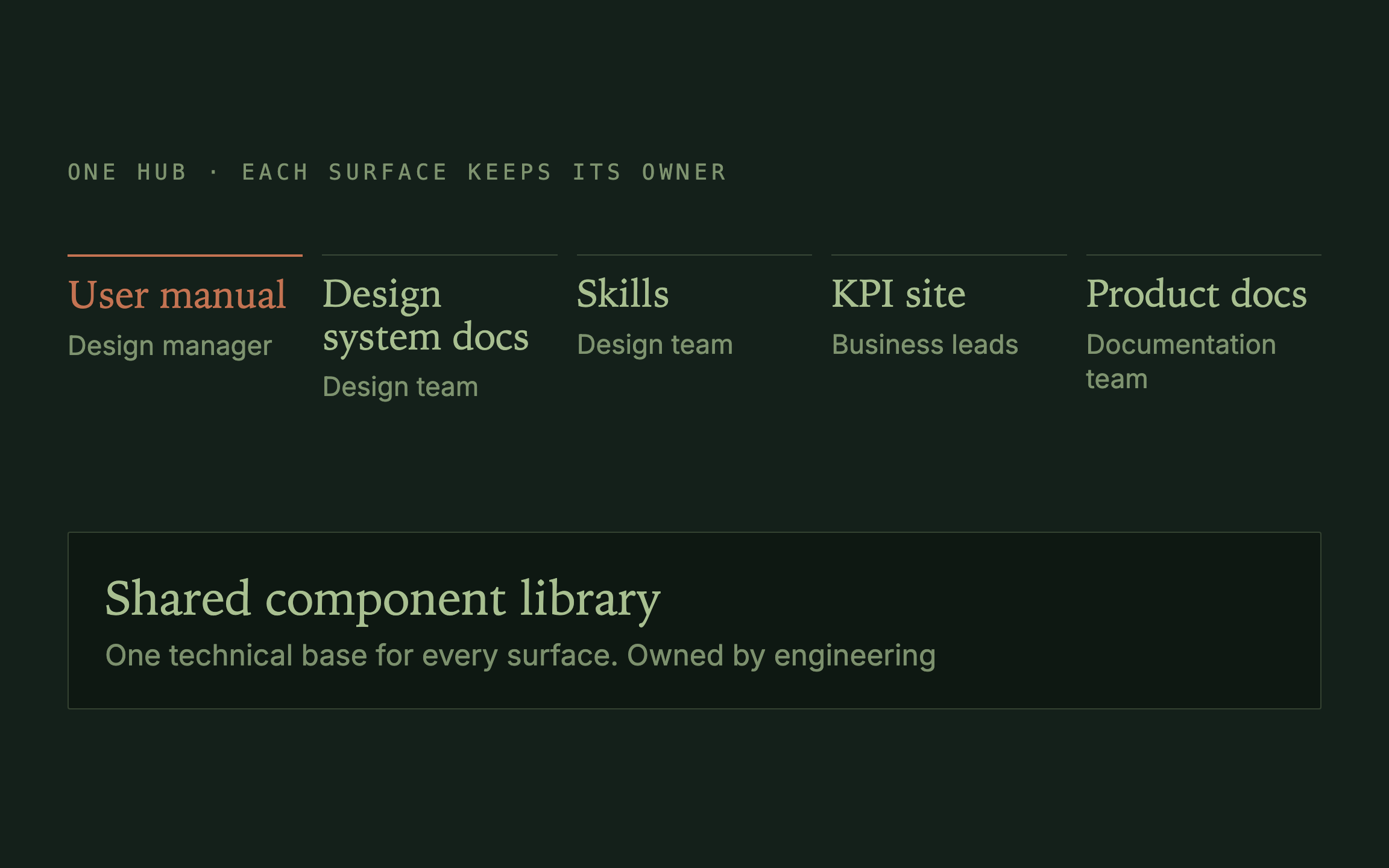
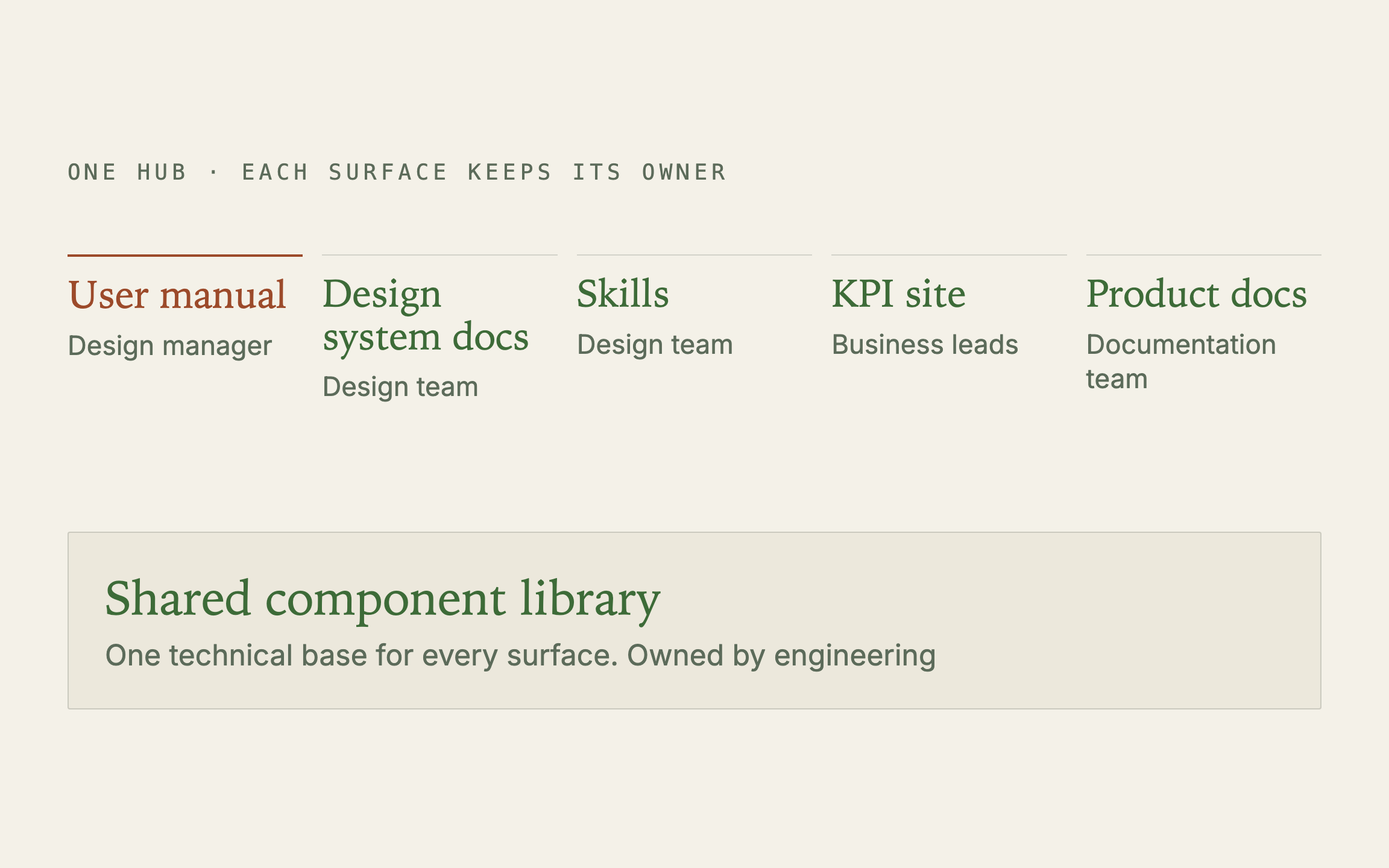
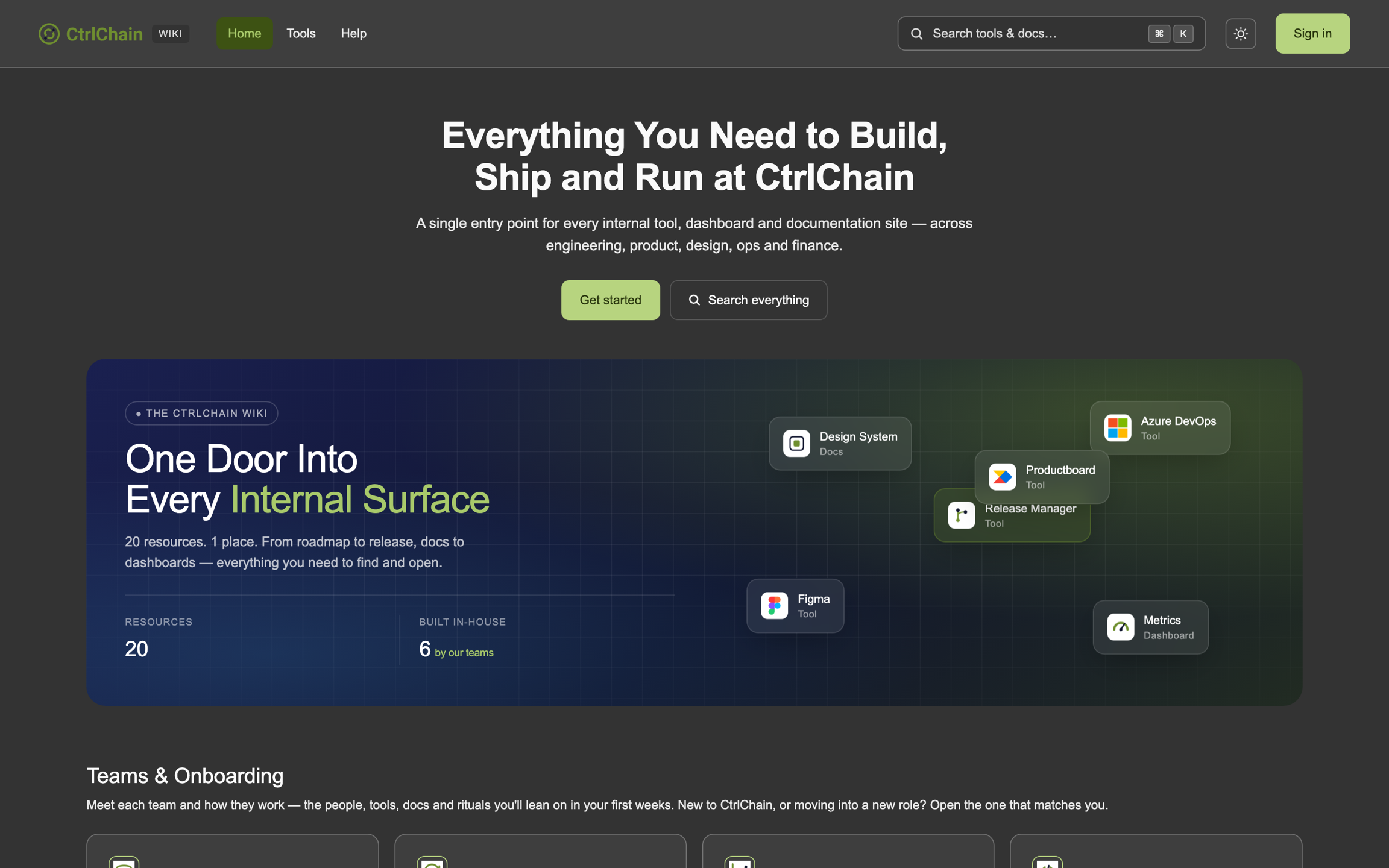
Live (27 May). The hub went live as the index of every internal tool, four weeks after approval.
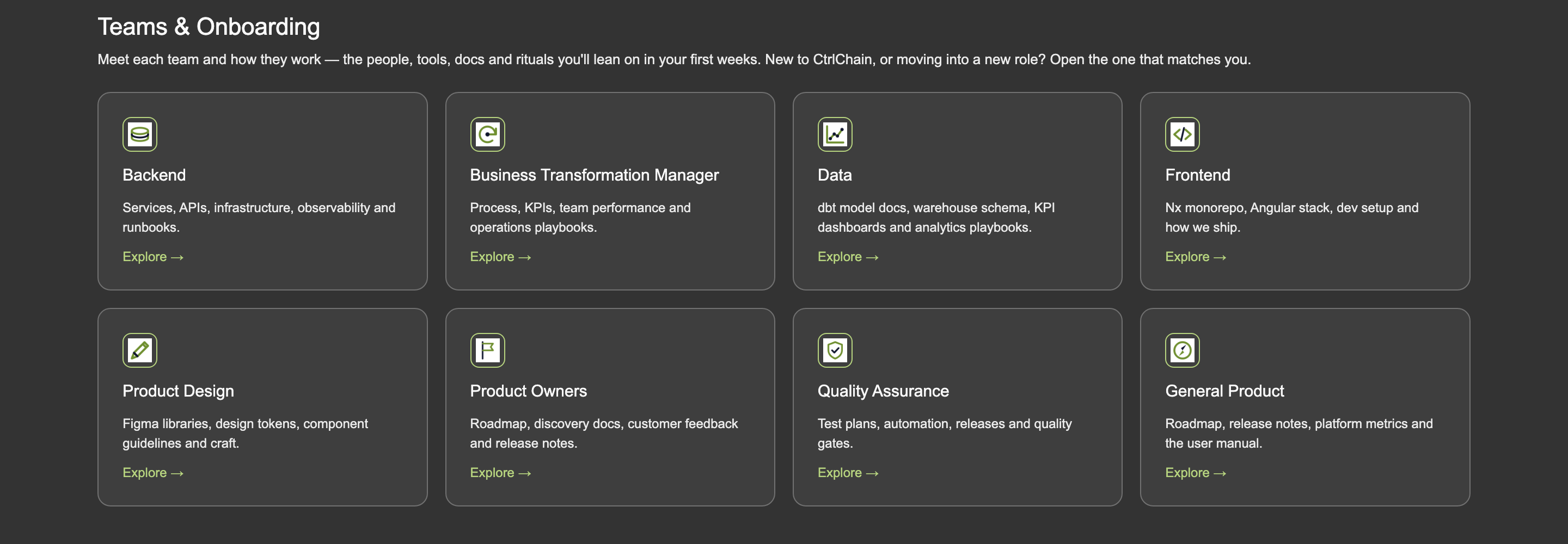
Onboarding (June). Role guides for eight roles: what each team does, its tools, docs and rituals, for a new joiner’s first weeks. Then training tracks by role cluster, with reading and hands-on assignments in staging.
Migration (July to August). The front-end architect moved the doc surfaces onto the company’s front-end stack, so engineering can maintain them.
The user manual ships on the same base. It has its own story.
Who did what
The proposal, the architecture brokered through to approval, and the hub’s content, structure and onboarding came from this seat. Pages were built directly too: 40 of the repo’s 124 commits.
The front-end architect is the technical owner: the monorepo, the shared component library, the migration and sign-in. A second engineer built the shared foundation. Doc owners run their own surfaces. Nine contributors in all.
Separate who owns the words from who owns the pipes.
What shifted
One entry point for engineering, product, design, ops and finance. New joiners in eight roles have a starting page instead of a list of people to ask.
Demand now comes from outside product. In October 2026, other teams asked to add their own onboarding, and a company-wide wiki is under discussion.
What it taught
The architecture only settled once content ownership and technical ownership were split. Before that, every proposal was really an argument about who would be stuck maintaining what.
And infrastructure built with engineering lasts longer than infrastructure built for it. The hub works because the front-end architect owns the platform.
-
Ownership is the architecture.
The technical shape followed once everyone knew what they owned.
-
Design can lead infrastructure without owning the code.
Product thinking for the hub, engineering ownership for the platform.
-
Onboarding is a product.
A new joiner is a user with a first-week job to do.
One door. Every team. Owners stay owners.