Case study · CtrlChain · 2026
Giving a design team a memory.
Research, decisions and skills in one repo. Clone it once and the whole team's thinking comes with it.
- 855
- Commits in six months
- 8
- Contributors
- 352
- Notes in the vault
Since the first commit on 23 April 2026.
Designers and product colleagues writing into one vault.
Research, decision records, design system rationale, ways of working.
The situation
Research, decisions and design rationale lived in people’s heads, in Loop pages and in chat threads. Findable on a good day, if the right person was around to ask.
Then AI was entering the team’s process as a practice built in 2026. And a model is only as good as the context it is given. Scattered knowledge was now a cost twice over.
The work
GitHub for design. Moved the design team onto Git: an organisation, private repos, the old Loop workspace brought into the repo. Designers clone, branch and commit like anyone else shipping work.
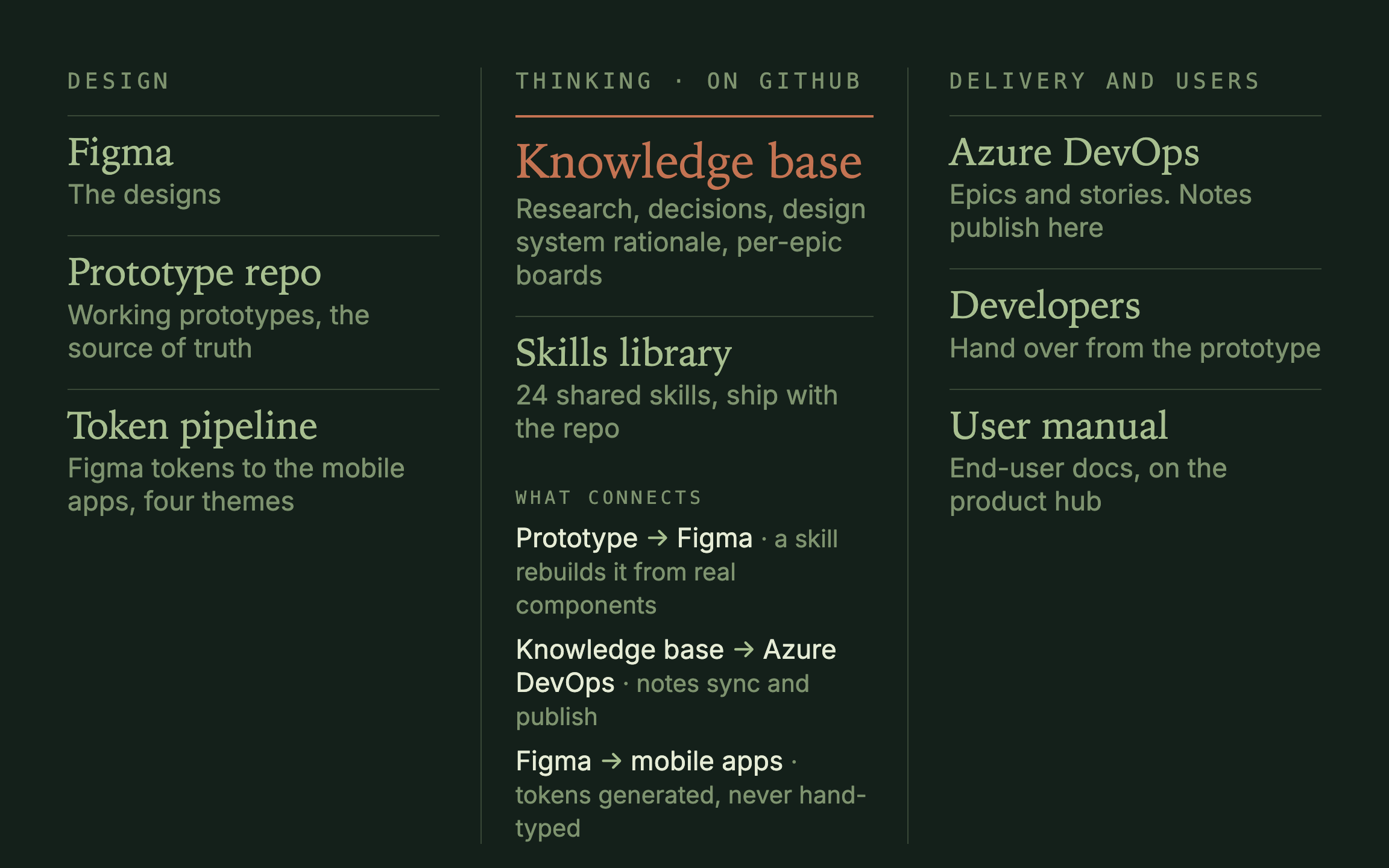
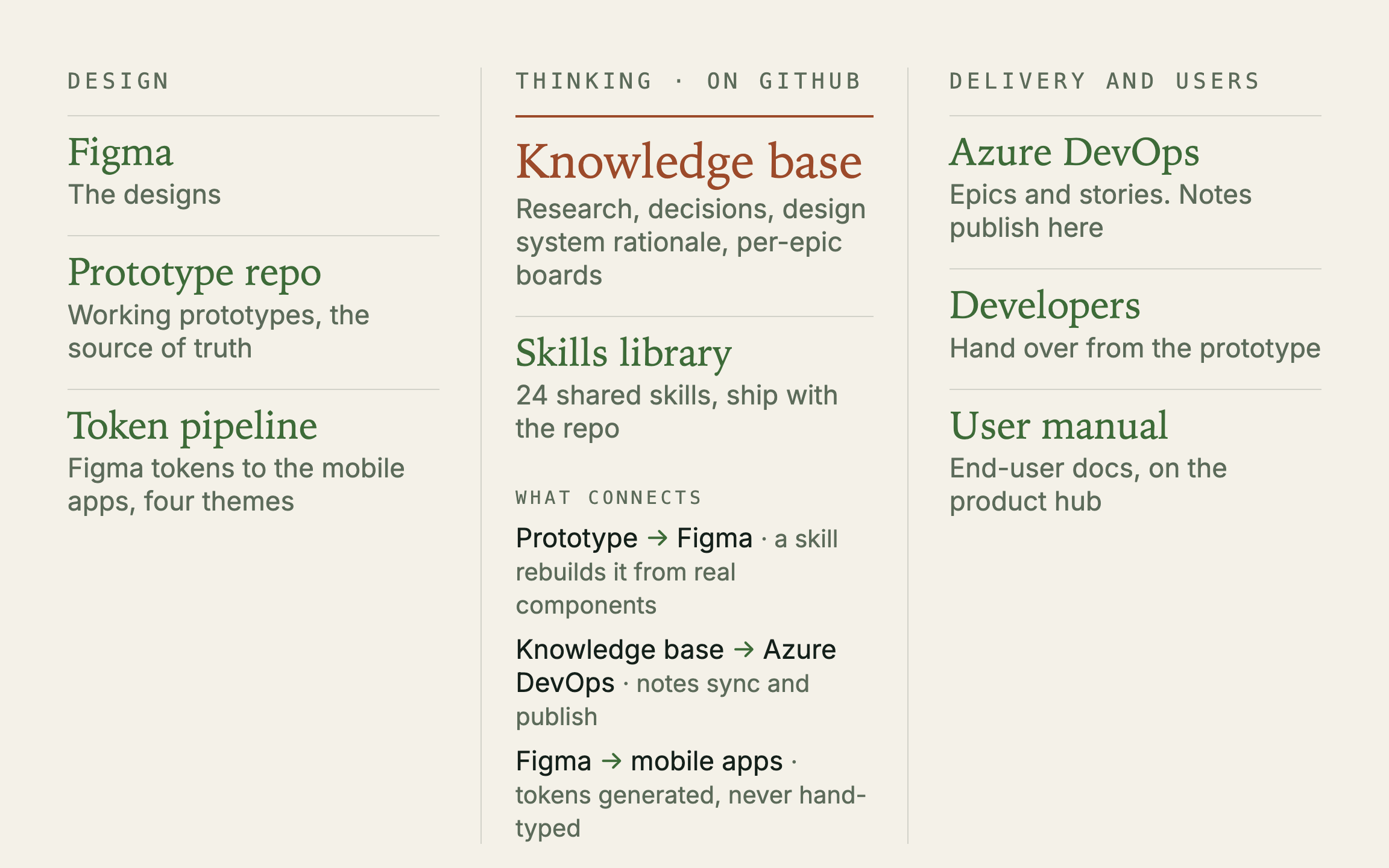
The Design Knowledge Base. An Obsidian vault synced through Git, set up in April 2026. A clear split from day one: designs in Figma, delivery in Azure DevOps, end-user docs in the manual, and the thinking here.
Conventions that make it findable. A tag taxonomy, kebab-case file names, and a required project key so every note joins to its epic. Decision records per project, so the why sits next to the what.
Sync to Azure DevOps. Notes publish to where product and engineering already look. Team-internal pages (principles, ways of working) stay out.
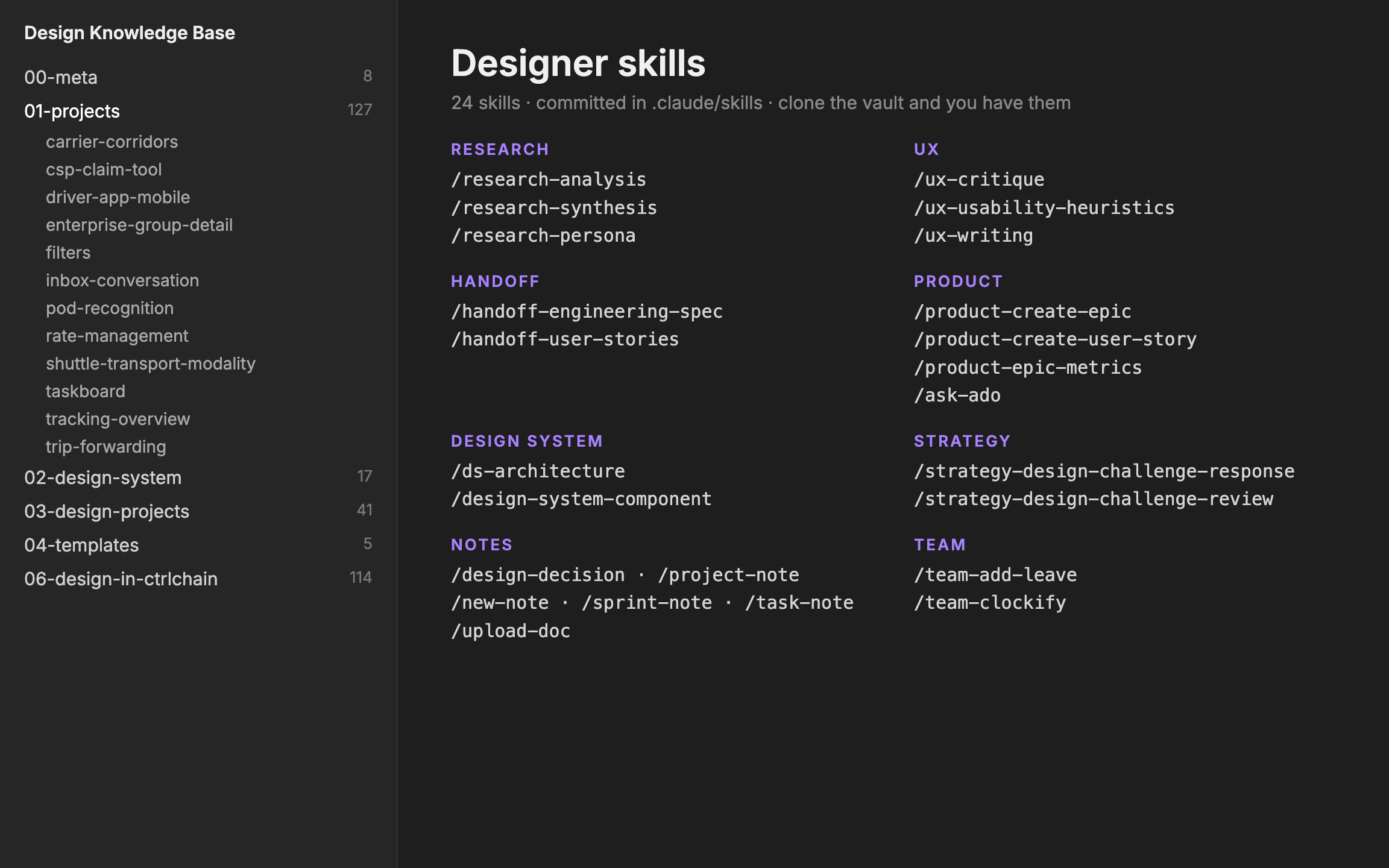
Skills in the repo. Clone the vault and the skills come with it: research synthesis, personas, usability heuristics, UX writing, decision records, engineering specs, user stories. No install step. In October the team audited the library itself after a skills workshop and cut eight that were not earning their place. 24 shared skills as of October 2026.
Prototype repo. One home for working prototypes, a prototype skill with a stages guide, and a prototype-to-Figma skill that builds with real design system components. Two internal Figma plugins live in the repo too.
Design tokens as code. A Figma to Flutter pipeline for the mobile apps. Four themed modes exported once, everything downstream generated, nothing hand-typed.
Per-epic boards. Every designer runs each epic from a board in the vault.
Measurement. A pipeline from product analytics (Clarity smart events) to live epic dashboards: funnel, completion rate, daily trends. A designer guide so anyone can add their epic. The filter epic reads 73% completion across 19.3K interactions. Those are the product team’s numbers. The measurement is what was built here.
What stayed out. Designs and sensitive notes. Figma stays the design home. One-to-one and performance notes stay personal.
Who did what
Set up the vault and GitHub for design, wrote the conventions, built the Azure DevOps sync, the token pipeline, the analytics dashboards and many of the skills. Owns the whole thing.
The designers built and consolidated skills, designed the per-epic board format, restructured the research repository and moved the prototypes in. Engineers own the shared wiki and component library the published docs sit on. Eight contributors in total, and the vault is better for every one of them.
Figma shows the design. The vault shows why it is that design.
What shifted
New hires clone one repo and get the research, decisions and tools on day one. Research compounds: past sessions feed persona work and ground AI for the next epic. Design reasoning now survives people leaving.
What it taught
Knowledge infrastructure is AI infrastructure. The same repo that onboards a designer grounds the model.
And a convention nobody enforces is a suggestion. The required project key earned its place the hard way, because untagged notes quietly disappear.
-
Write down the why, not only the what.
Figma shows the design. The vault shows why it is that design.
-
Ship the tools with the knowledge.
Skills committed next to the notes mean no install step and no drift.
-
Context is the bottleneck for AI.
A team that writes its reasoning down gets better output from every tool it adds.
Clone once. Get the whole team's thinking.