Case study · CtrlChain · 2026
Identity, values, and how a team designs together.
One afternoon. One team finding its language out loud, together.
- 3.0
- Workshop edition
- 4 + 5
- Principles and values
- 5 / 5
- Designers in the room
The third team workshop, held on 4 April 2026.
Four design principles adding up to Trust. Five team values.
Co-authored. Not presented for review.
The situation
A team of five product designers at CtrlChain, several product surfaces, five different ideas about what good design looks like in this company. Working well day to day, but speaking different design languages when the work got hard.
What was missing was not a values document. There were values floating around already. What was missing was the team writing them down together.
The work
Workshop 3.0, on 4 April 2026. The third edition of the team workshop, with every designer then on the team in the room.
Team values. How the team wants to work together, in its own words. Five values: respectful and empathetic, having fun, collaborative, passionate, problem solvers.
Design principles. How the team decides when the work gets hard. Four principles, each with a one-line meaning:
- Scalable. We build things that last.
- Consistency. If it looks the same, it works the same.
- Data driven. We decide with evidence, not opinions.
- Intuitive. The hard work is ours, not the user’s.
Together they add up to one word: Trust. Predictable and clear.
A ways-of-working session followed on 8 September 2026.
Direction came from this seat. The work itself, the wording, the disagreements that sharpened each principle: the team did all of that.
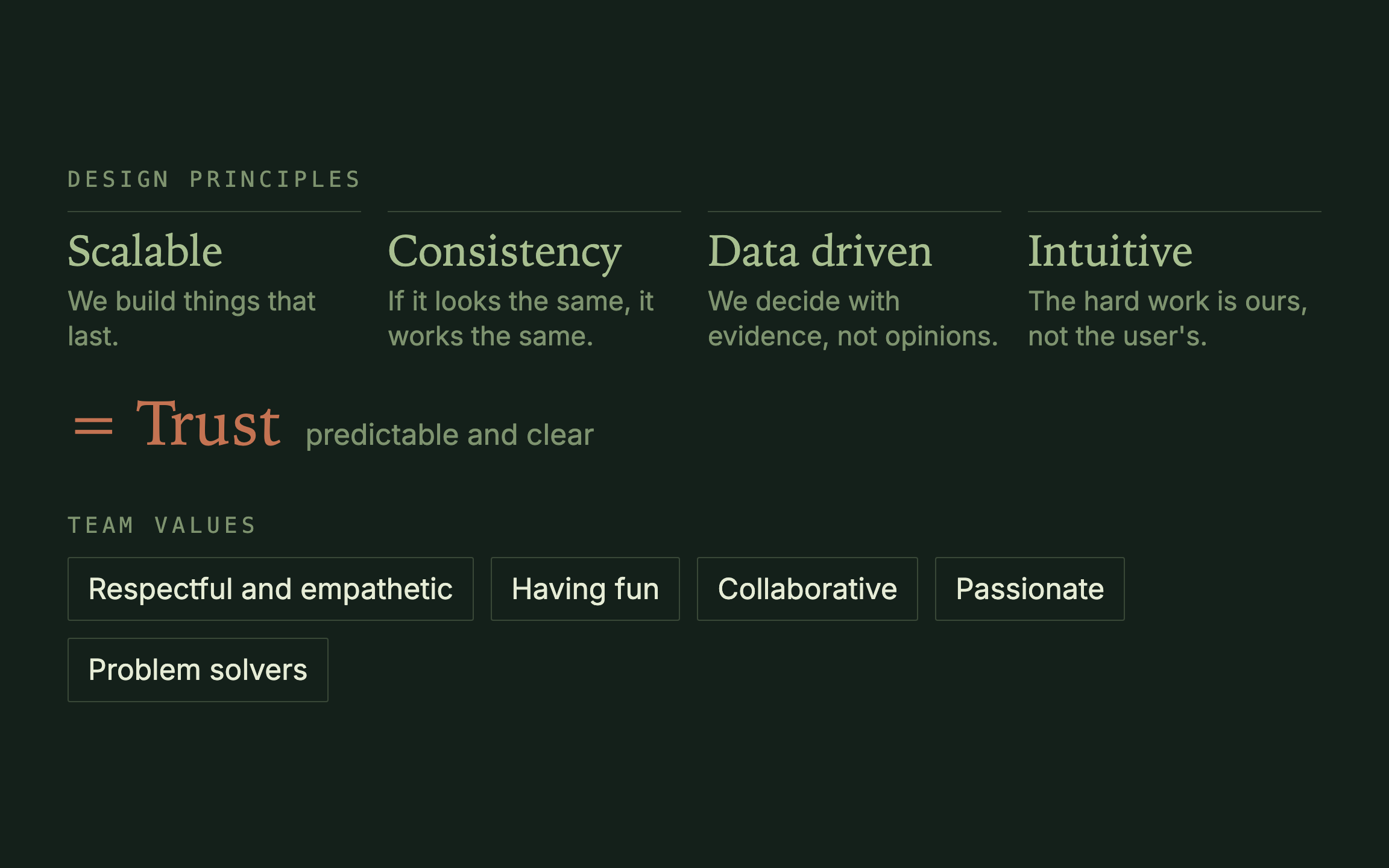
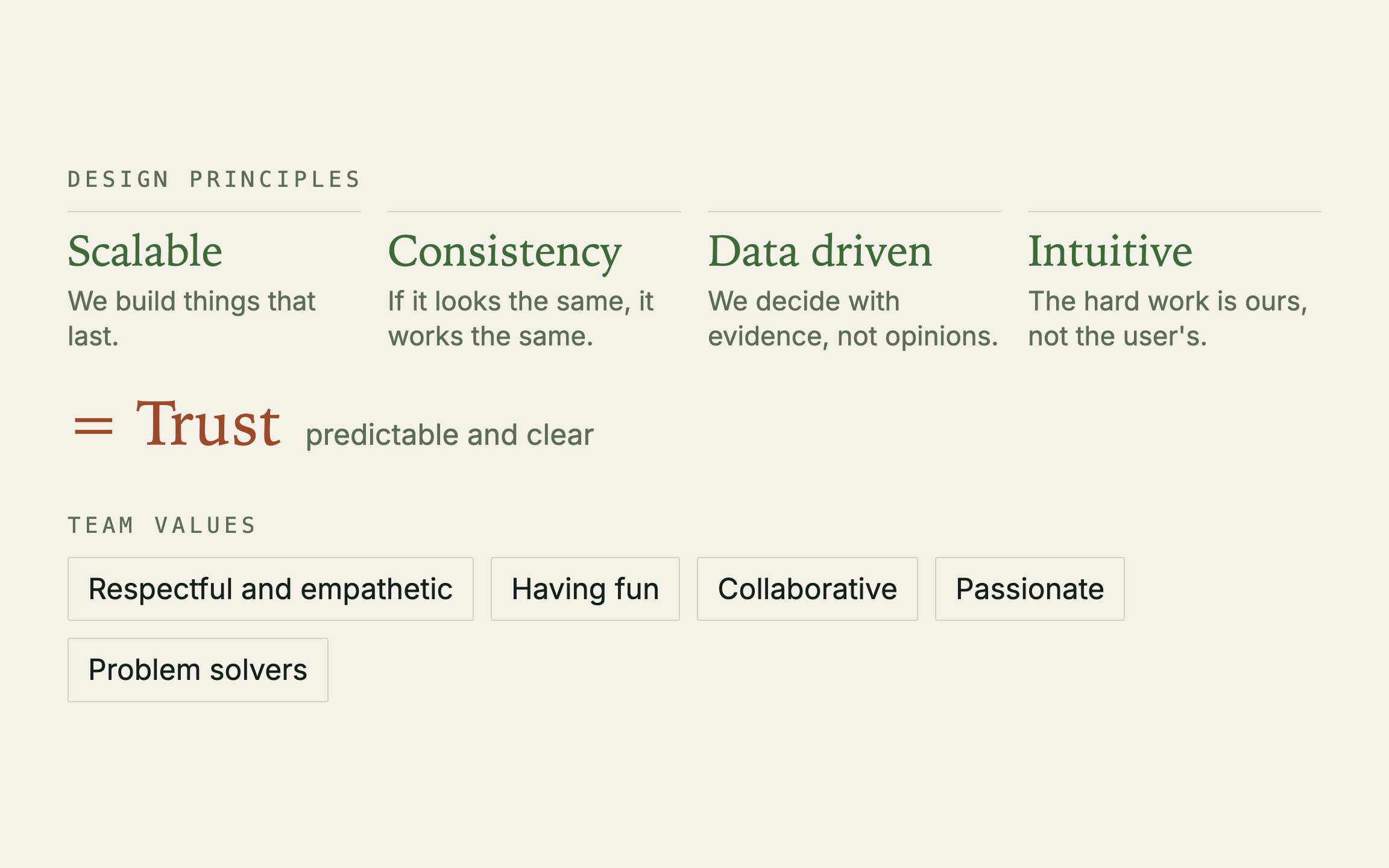
Shared values and design principles, drafted with the team, not for them.
What shifted
Disagreements got faster. The principles gave the team a shared place to point. Onboarding the next designer got easier, because there was a real document to walk them through, not a vibe to absorb. The team started using the language in their own work without prompts.
What it taught
Co-authorship beats consultation. A workshop where the team builds the thing together produces a different artefact than one where the manager presents it for review. The artefact looks similar from the outside. The relationship to it is different from the inside.
Four principles, five values, one team that means them.