Case study · CtrlChain · 2022–2026
From UI/UX function to product design discipline.
Four years of inheriting a UI/UX function and shaping it into a product design discipline.
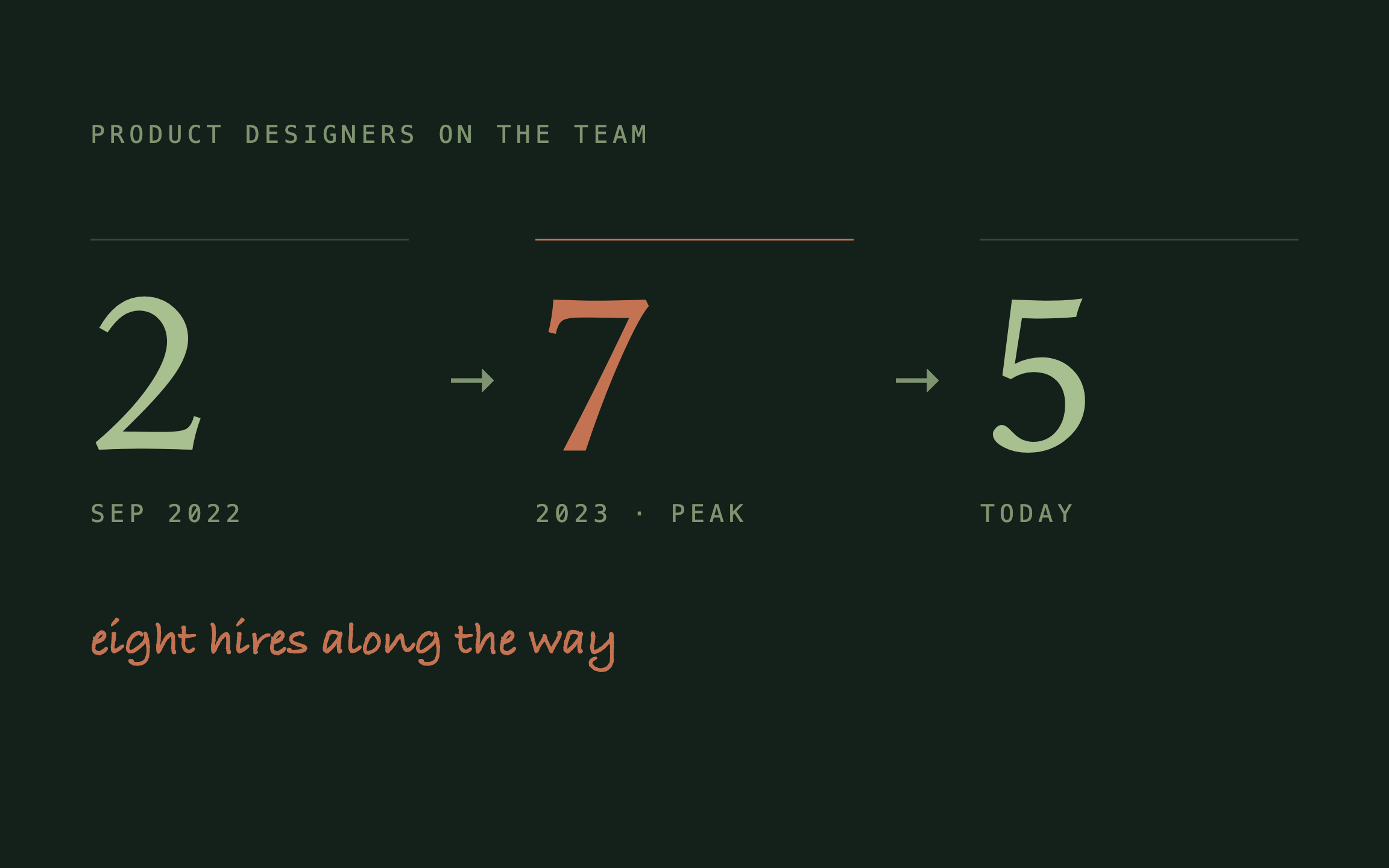
- 2 → 7
- Designers on the team
- 4yr
- Programme arc
- XD → Figma
- Design system migration
Peak in 2023. Eight hires since 2022. Five today.
From inherited function to governed discipline.
Library → governed system in two years.
The situation
CtrlChain in September 2022. A small UI/UX function inside a logistics product, with a roadmap moving faster than the team could keep up with. Two designers, a backlog measured in months, a design language that lived in screens rather than in a system.
The brief was small. Help the team. Four years later it had become something else, and the role with it: Product Design Manager officially from January 2026.
The work
Most of the work was not screens. Hiring, first. Eight hires since September 2022. The team grew from two designers to a peak of seven in 2023, covering shipper and carrier transport management, order management, mobile and integrations. In 2026, approval secured for two more hires, both run end to end, through an interview process built to be reused. Coaching, second. Each designer on a dated growth arc, performance reviews that meant something, growth conversations that were honest, public crediting whenever the team shipped.
Then the rituals. Small commitments that compound. Since September 2026 that means a weekly design catch up with craft review built in, plus a monthly retrospective. Then the language: shared values, design principles, a tone of voice that the team co-authored in its own workshops, and an onboarding doc built around those principles.
The design system grew alongside all of it. Migration from Adobe XD to Figma in the first six months. A component library in the first year. Token language and design-to-engineering taxonomy alignment in the second. By the third year the system had matured from a component library into a governed system the team could contribute to without breaking each other’s work.
The screens are the output. The infrastructure is the project, and quietly the favourite part.
What shifted
A function became a discipline. Since September 2026, the designers work across epics rather than per product area, all building on the same system. Hand-offs to engineering went from rebuild conversations to consume conversations. Design review moved from verdict to dialogue. The team started speaking about their work in the company’s product reviews without needing prompts.
What it taught
Most management problems are systems problems. A weekly ritual that compounds beats a quarterly intervention that doesn’t. Credit, given publicly and specifically, costs nothing and changes how a team shows up the next week.
And the team did the work. Direction came from this seat. The work itself was theirs.
Four years, seven designers at the peak, one language. And the team did the work.